

01 · Sourcing routes
A quick comparison of the three sourcing routes
Each route solves a different sourcing problem. The useful question is not “Which one is best?” but “Which one fits this product, this order and this stage of development?”
| Sourcing route | Strongest use | Buyer or order profile | Main advantage | Key caution |
|---|---|---|---|---|
| Canton Fair | Concentrated category discovery and face-to-face supplier meetings | Buyers exploring categories, comparing approaches or building an initial shortlist | Many relevant conversations can be scheduled within one sourcing trip | A booth, catalog or first quotation is not a substitute for verification and sample approval |
| Yiwu International Trade Market | Market-ready product discovery and broad assortment building | Wholesalers, retailers and ecommerce buyers working across multiple SKUs | Variants, packaging ideas and samples can be compared efficiently | The seller’s production role and ability to reproduce the approved sample still need confirmation |
| Direct factory sourcing across China | Defined specifications, repeat production, private label and custom development | Buyers requiring alignment with a process, material or industrial cluster | Deeper evaluation of production capability and product fit | Factory direct does not automatically mean the lowest total cost, MOQ or risk |
What buyers are really trying to avoid
The route itself is rarely the only concern. Buyers are usually trying to prevent four common gaps:
- A supplier looks suitable during discovery, but its production capability does not match the product.
- Quotations appear comparable, but cover different specifications, packaging or commercial terms.
- An approved sample is not translated into clear controls for mass production.
- A problem appears, but no one owns follow-up across the supplier, inspection, warehouse and forwarder.
A good market or factory can still lead to a poor outcome when these gaps are unmanaged. Route selection and execution should therefore be considered together.
Concentrated discovery
Canton Fair: concentrated discovery across product categories
The Canton Fair is useful for intensive, scheduled discovery. Buyers can examine products, meet suppliers and compare how different companies respond to the same brief, especially when several related categories are under review.
The fair’s dates, phase structure, exhibition categories and buyer requirements can change between sessions. Before planning a trip, confirm the current information on the official Canton Fair website rather than relying on an old guide or social post.
When the Canton Fair fits
Consider the fair when you want to:
- scan a category and its adjacent products within a limited travel window;
- hold face-to-face conversations with several potential suppliers;
- compare market-ready, OEM and ODM possibilities;
- review physical products before deciding which suppliers deserve follow-up.
What the fair does not replace
An exhibition stand is a discovery point, not a completed qualification process. Buyers should still confirm the supplier’s legal entity, production role, relevant capability and responsibility for the quoted product.
Initial quotations also need normalization: two prices may cover different materials, packaging, quality levels or commercial terms. After the event, follow-up questions, a common request for quotation, supplier verification and sample approval turn collected contacts into a usable shortlist.
Efficient assortment
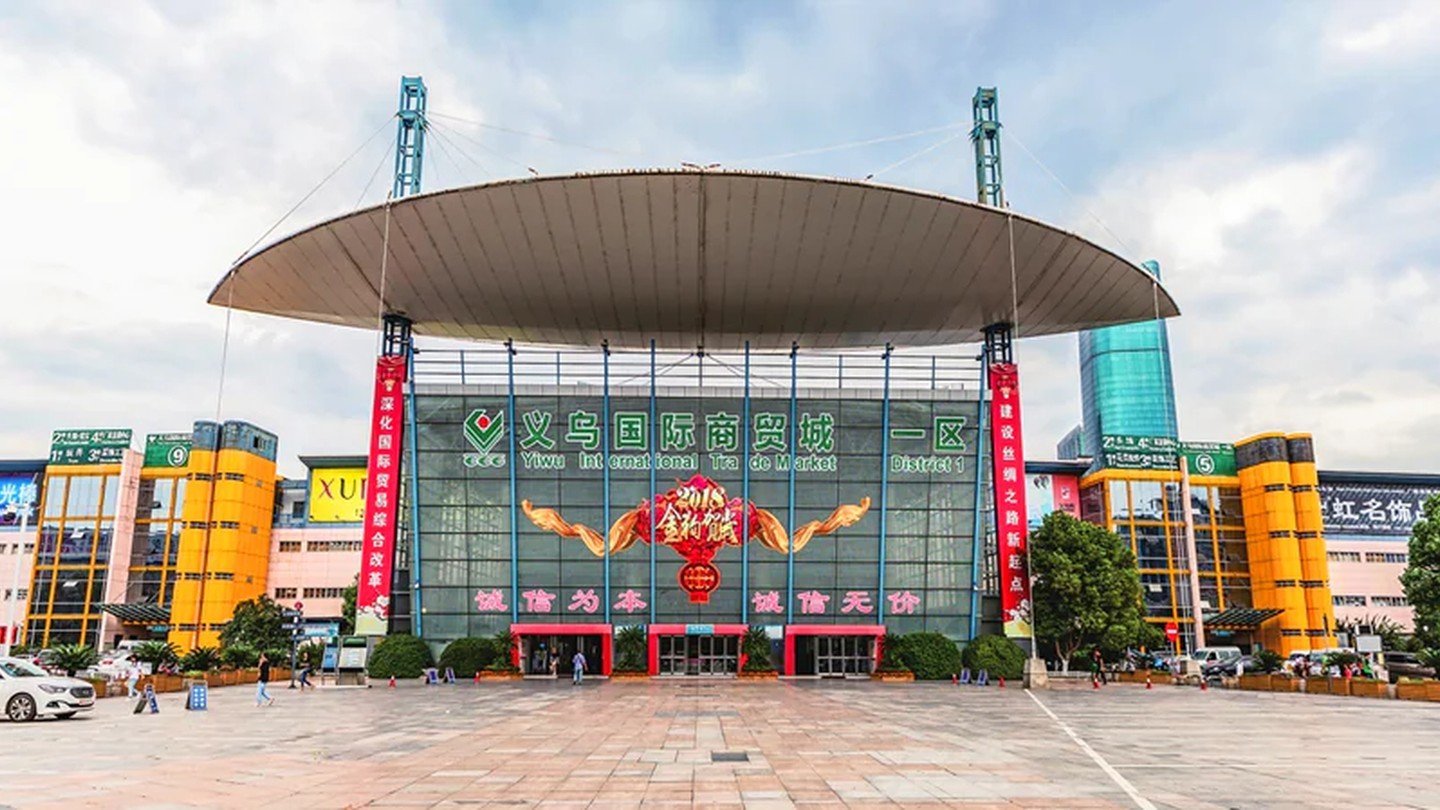
Yiwu International Trade Market: efficient assortment building
Yiwu International Trade Market is a practical starting point for buyers who need variety. It supports efficient comparison of market-ready consumer products, styles, packaging formats and price positions across multi-SKU ranges.
When Yiwu Market fits
Consider Yiwu when you want to:
- compare many market-ready products and variants;
- create a mixed assortment rather than focus on one technical SKU;
- collect samples before narrowing the range;
- explore private-label possibilities on proven products and combine suppliers.
Products dependent on a specialist material, process, tooling platform or technical capability may fit a manufacturing cluster elsewhere in China.
What buyers still need to verify
A market stall may represent a manufacturer, trading company, sales office or a combination of roles. What matters is knowing who will make the product, control quality and remain accountable. Buyers should document materials, dimensions, color, branding, packaging and labeling so the production version can be checked against the approved sample. Multi-supplier orders also need one consolidation and loading plan.
Manufacturing alignment
Direct factory sourcing across China: deeper manufacturing alignment
Direct factory sourcing is usually stronger for defined products, repeat production, private label, design adaptation or original development. The objective is to match the product with a suitable manufacturing system, considering material expertise, process, tooling, finishing, assembly, capacity and destination-market requirements.
Alfin Union is based in Yiwu, but its sourcing scope is China-wide. Yiwu provides strong local access for market discovery and order coordination; supplier matching can extend to source factories and specialist manufacturing clusters across China according to the product.
When direct factory sourcing fits
Consider a direct factory route when you have:
- a defined specification or approved reference product;
- a core SKU intended for stable or repeat orders;
- material, dimension, function or performance requirements;
- private-label packaging that requires controlled execution;
- a need for sample iterations, tooling or capability assessment.
Why “factory direct” is not an automatic guarantee
A factory quotation is not automatically the lowest total cost. Order thresholds, tooling, outsourced processes, production schedules, communication, packaging, inspection and logistics all affect the result. Buying directly does not remove risk by itself; verification, written specifications, sample approval, production visibility and inspection do.
05 · Execution
Discovery is only the starting point
Whether a supplier is found at the Canton Fair, in Yiwu or through a China-wide factory search, discovery creates a candidate. It does not complete the sourcing project.
Compare quotations against one specification
A useful comparison begins with one brief covering dimensions, materials, workmanship, accessories, packaging, labeling, quantity range, destination and timing. Otherwise, a lower quotation may describe a different product or scope.
Verify, sample and approve before production
Supplier verification should examine the entity, production role, category fit, capability, communication and order terms. Samples then turn the brief into an approval reference. Record revisions and approve both the product and packaging before production.
Keep production, quality and logistics connected
During production, schedules, specifications, packaging and changes need follow-up. Quality control should use the approved requirements and reflect product risk. Export documents and logistics must fit the product, destination and agreed responsibilities.
With several suppliers, warehousing and consolidation add another control point. Alfin Union’s China sourcing services show how these stages connect from brief to shipment.
06 · Buyer decision
What route should you choose?
Decision checklist
Are you exploring a category, or do you already have a defined product?
Do you need one focused SKU or a broad, mixed assortment?
Is the product market-ready, private label, adapted or original?
Which materials and manufacturing processes are essential?
Does the order require repeat consistency or initial market testing?
How much supplier verification and production visibility does the risk justify?
Will products from several suppliers need checking and consolidation?
Who will own follow-up after discovery?
When concentrated discovery and category comparison justify a scheduled trade-fair visit.
When broad assortment, market-ready products and multi-SKU efficiency lead the plan.
When specifications, processes, customization or repeat supply need deeper alignment.
When a combined route works better
The routes are not mutually exclusive. A buyer may discover at the Canton Fair, benchmark in Yiwu and then qualify a specialist factory. Another may use Yiwu for a flexible assortment while placing core repeat products with direct factories.
07 · Trust through process
What should you expect from a reliable sourcing partner?
A sourcing partner should make decisions clearer—not ask you to rely on vague assurances. Before appointing one, you should be able to understand how the partner will:
- recommend a route around the product instead of forcing every brief into the same supplier base;
- check the supplier’s identity, production role, category fit and relevant capability;
- compare quotations against one specification and explain material differences;
- record sample revisions, packaging details and the final approval reference;
- follow production milestones and report deviations before they become shipment problems;
- connect quality control, consolidation, export documents and logistics under clear responsibility.
No sourcing agent can credibly promise zero risk, the lowest price or perfect production. Trust comes from clear responsibilities, written approvals and evidence at each decision point.
Alfin Union is designed to work from this buyer-side perspective. Based in Yiwu, the team can use local market access where it fits and extend supplier matching to manufacturing clusters and source factories across China when a different route is stronger.
Support can continue through quotation comparison, verification, samples, production follow-up, quality control, consolidation, export documents and logistics. The route is selected around the product, order quantity, market and development stage.
08 · Common questions
Frequently asked questions
Is the Canton Fair better than Yiwu Market?
Neither is universally better. The Canton Fair suits concentrated, scheduled discovery. Yiwu is often more practical for ongoing visits, market-ready products and multi-SKU assortment building. Category, timing and development stage should decide.
Is direct factory sourcing always cheaper?
No. Order quantity, tooling, customization, packaging, quality control, communication, freight and error risk all affect the outcome. Compare quotations against the same specification and scope.
Why use a sourcing agent if I can contact suppliers directly?
Direct contact can work well when your team has the time and process to verify suppliers, normalize quotations, manage samples, follow production and coordinate quality and shipping. A sourcing agent becomes useful when you need a China-based coordination point across these stages—especially for several suppliers, product development or consolidated orders. The value should come from clearer decisions and stronger execution, not simply passing messages.
Can I work with a supplier I found myself?
Yes. Work can begin with your Canton Fair contact, Yiwu supplier, online lead or factory candidate, followed by qualification, quotation comparison, sampling, production follow-up, inspection or shipping coordination.
Can products from several suppliers be combined?
Often, subject to product, warehouse, timing, documentation and shipping requirements. Coordinate supplier completion dates, carton information, incoming checks and loading before booking shipment.
Does Alfin Union source only in Yiwu?
No. Alfin Union uses its Yiwu position for discovery and coordination, while matching products with suitable manufacturing clusters and source factories across China.
Choose the route around the product
Start with the product brief, not a predetermined channel. You do not need a finished RFQ: a product photo or link, approximate quantity range, destination market, customization needs and timing are enough for an initial route review.
If you are unsure where to start, send Alfin Union your product brief. The first conversation can identify which route deserves attention and what should be verified next. You can then decide whether you want support with supplier follow-up and execution.